A full grain leather dog collar keeps the whole outer layer of the hide. Trade sources rank that the strongest common grade, and it picks up a patina with age. Top-grain is the same layer, sanded smooth. “Genuine leather” is a label rather than a grade, and bonded leather is shredded scraps held together with glue.
Below, we sort out the terms and show how to spot each one on a strap. Then comes a checklist that works on any brand.
What does full grain leather mean?
Every hide has layers. The outer one, called the grain, packs its fibres tightest. Full grain leaves that surface whole, so growth lines, small scars and the odd insect bite can stay visible.
A buyer’s guide from LeatherLine credits that tight fibre structure for the strength. It also develops a patina, varies piece to piece, and should be judged by selection and cutting as much as by grade name. Patina means soft sheen plus deeper color, built up by handling and wear. Upkeep tips live in our leather collar care guide.
How do top-grain, genuine and bonded leather differ?
Each name signals which layer you get and how much original surface survives. This summary draws on that same guide.
| Grade | What it is | What you see | Worth knowing |
|---|---|---|---|
| Full grain | Surface untouched | Natural marks and pores | Strongest common grade |
| Top grain | Outer layer, lightly sanded or buffed, then finished (sometimes pigmented or embossed) | Cleaner, even face | Can be excellent; ages differently |
| Genuine leather | Label: real leather inside | Varies widely | Not a grade; often finished split |
| Split | Layer left after the grain comes off | Suede or coated face | Weaker than grain leather at equal thickness |
| Bonded | Shredded fibre plus binder, usually polyurethane-faced | Very even, plastic-like | Not full grain |
Think of a ladder. Near the top you see the hide itself. Lower rungs lean on finish, coating or binder to do the visual work. A shorter list sits in our handmade versus mass-produced article.
What do the FTC rules say about the word “leather”?
The Federal Trade Commission issues Leather Guides, filed as 16 CFR Part 24. They call the plain word “leather” deceptive unless a product is made in all substantial parts of leather.
Ground, shredded or bonded material shouldn’t be sold as leather outright. A seller who writes “bonded leather” should state the percentage of real fibre. The FTC’s own example reads “Bonded Leather Containing 60% Leather Fibers and 40% Non-leather Substances.”
Fine print: the guides name bags, belts, footwear and similar articles, and dog collars aren’t listed. They advise industry rather than bind pet gear. We use them as a yardstick for honest labels, nothing more.
How can you tell the grades apart on a collar?
No test at home proves it. Treat these as rules of thumb, since a written answer from the seller beats all of them.
- Edges. Check a cut edge and the back. Tight, dense fibres hint at a solid hide, a fuzzy back hints at a split, and a crumbly core under a smooth plastic skin points to bonded stock.
- Grain pattern. Natural surfaces wander, with pores of different sizes. A pattern that repeats like a rubber stamp suggests embossing.
- Smell and flex. Real hide smells earthy, while sharp plastic odor suggests heavy coating. Bend a spare strip if you can: natural leather forms fine, soft wrinkles, and a thick finish may crease sharply.
- Price. Whole-surface hide costs more per square foot than split. Rock-bottom pricing is a clue, not a verdict.
What is the best leather for dog collars, vegetable-tanned or chrome-tanned?
Neither wins outright. Tanning turns raw hide into durable material, and the method changes behavior near water. The Canadian Conservation Institute describes both routes in its guide to caring for leather, skin and fur.
Vegetable tanning soaks hides in liquids brewed from bark, leaves or twigs, for two days minimum and sometimes a year or more. Oils go in afterward, since the result starts out hard. The guide lists bags, belts, straps, harnesses and saddles among its uses, so a vegetable tanned leather dog collar follows old tradition. Drawback: direct water may shrink or stiffen it, and can draw tannins to the surface as stains.
Chrome tanning relies on chromium salts. It dates to roughly 1884, and the guide reports that a large share of world leather is now mineral-tanned. Those salts bind to fibres, giving chemically stable, water-resistant material. Fully chrome-tanned pieces won’t shrink or change, even in hot water.
Makers also blend both, so labels rarely tell everything. A mostly dry dog can wear either type, while a creek-wader fares better in chrome-tanned hide or a non-leather strap, which we compare in fabric versus leather dog collars.
Why does leather grade matter on a dog collar?
Three stresses test any strap.
Pulling. Leashes jerk, and dogs lean into walks. Our reasoning, not a lab result: tight, intact fibres should keep their shape better than a thin split or binder-held sheet. LeatherLine does say splits are weaker than grain leather at equal thickness.
Holes. Each punched hole concentrates load around it, and cracks tend to start there. Inspect those first, and retire the strap if leather beside one splits.
Water. Puddles are fine. Daily swims are not.
What should you check before trusting a strap?
Grade is one factor among several. These points count at any price.
- Stitching: even, tight, no loose ends near buckle or ring.
- Hardware: a closed ring, tongue straight in its hole.
- Edges: smooth, nothing rough to rub a neck.
- Holes: clean punches with solid leather before the edge.
- Fit: two fingers slide underneath. Our size guide shows how to measure.
Allow a minute. It also suits straps already hanging by your door.
What leather do BohoBarks collars use?
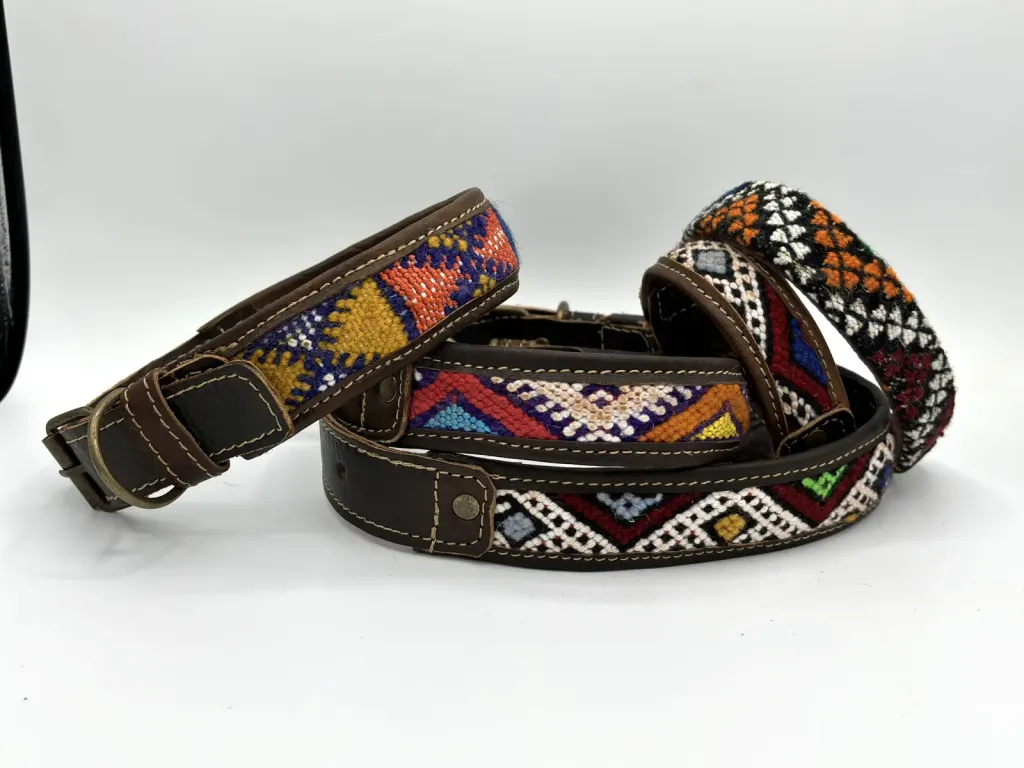
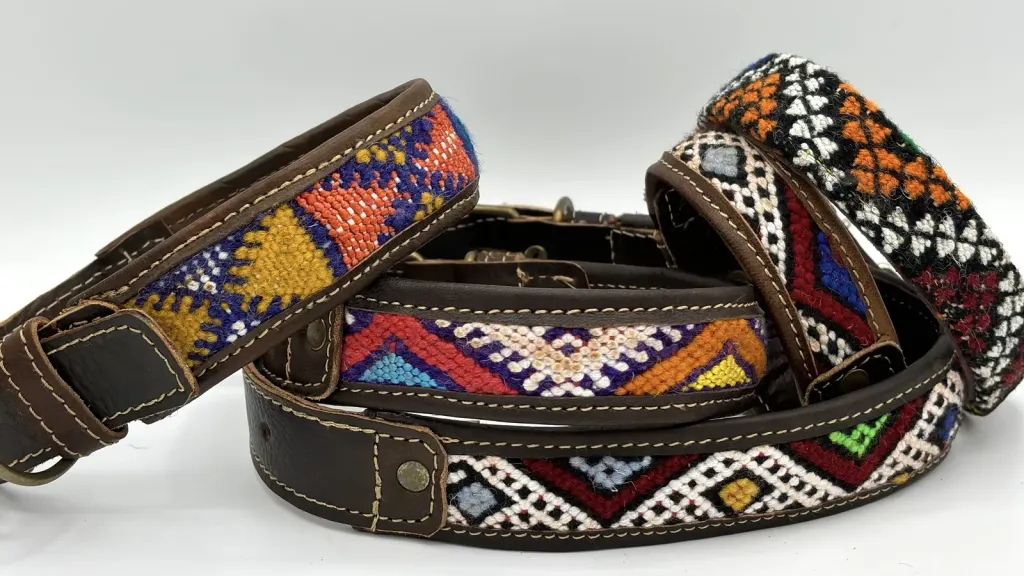
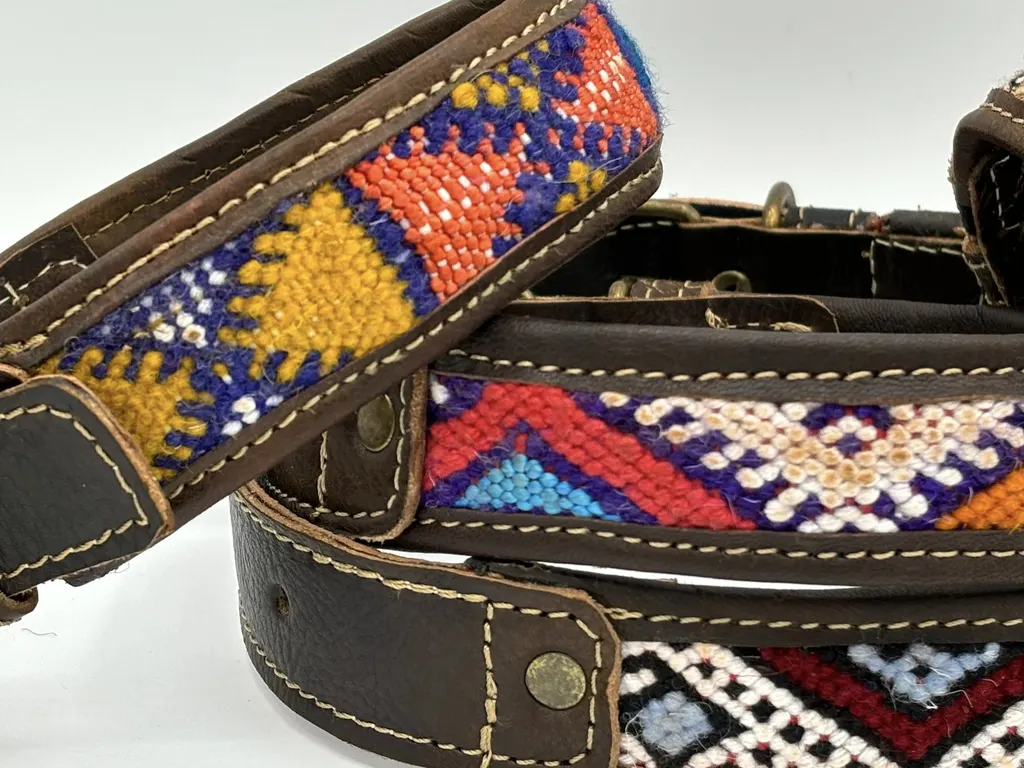
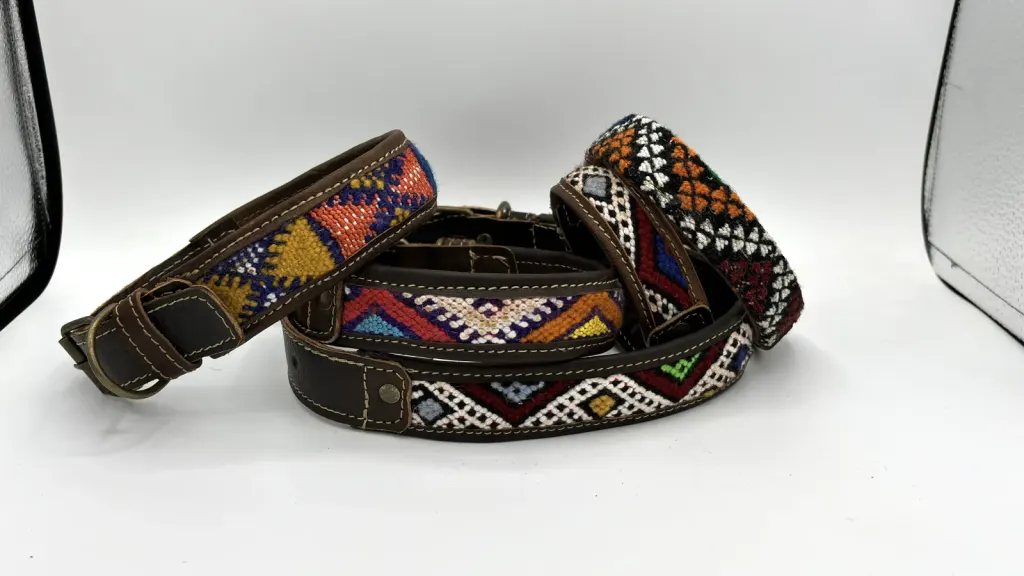
Every BohoBarks collar uses full-grain leather, paired with a handwoven Moroccan wool band, a brass-tone buckle and a D-ring. Our materials page shows the parts side by side, and the anatomy of a kilim dog collar explains how they join.
The tanning method is the gap in our knowledge. Nobody has confirmed it for us, so we won’t say vegetable or chrome. Better a blank than an invented detail.
Wool and leather both dislike soaking, so take it off before swims and baths. Think walks, trails and daily wear, not a dog that lives in the lake.
Frequently asked questions
Is full grain the best leather for a dog collar?
For daily wear and aging, it’s the usual pick. Build quality still counts, though. A well-made top-grain strap can outlast a sloppy full-grain one, so inspect stitching and metalwork too.
Is genuine leather real leather?
Yes, some of it is. The label reveals nothing about layer, thickness or finish, and in the trade it often means finished split leather. Take it as a cue to quiz the seller.
How can I tell if a collar is really full grain?
Look for an uneven natural surface, a dense cut edge and a straight answer. Rules of thumb only go so far, so ask the maker which hide layer the strap comes from and whether the surface is uncorrected.
Handwoven band, full-grain leather, your dog’s size: shop BohoBarks collars and choose your design.