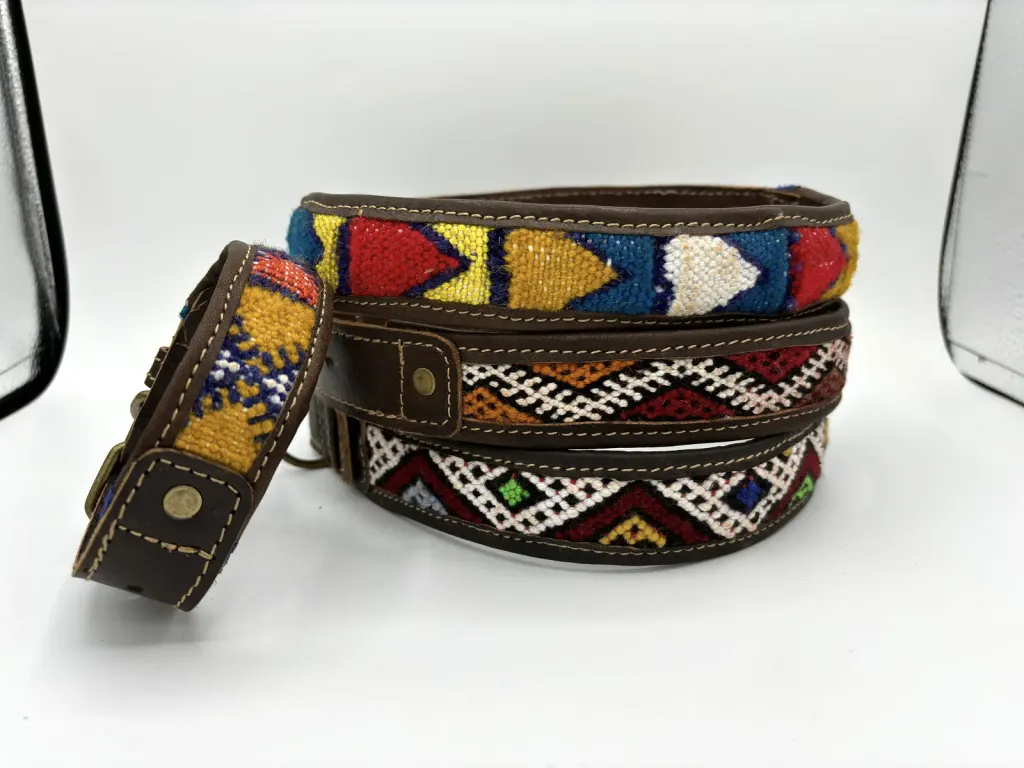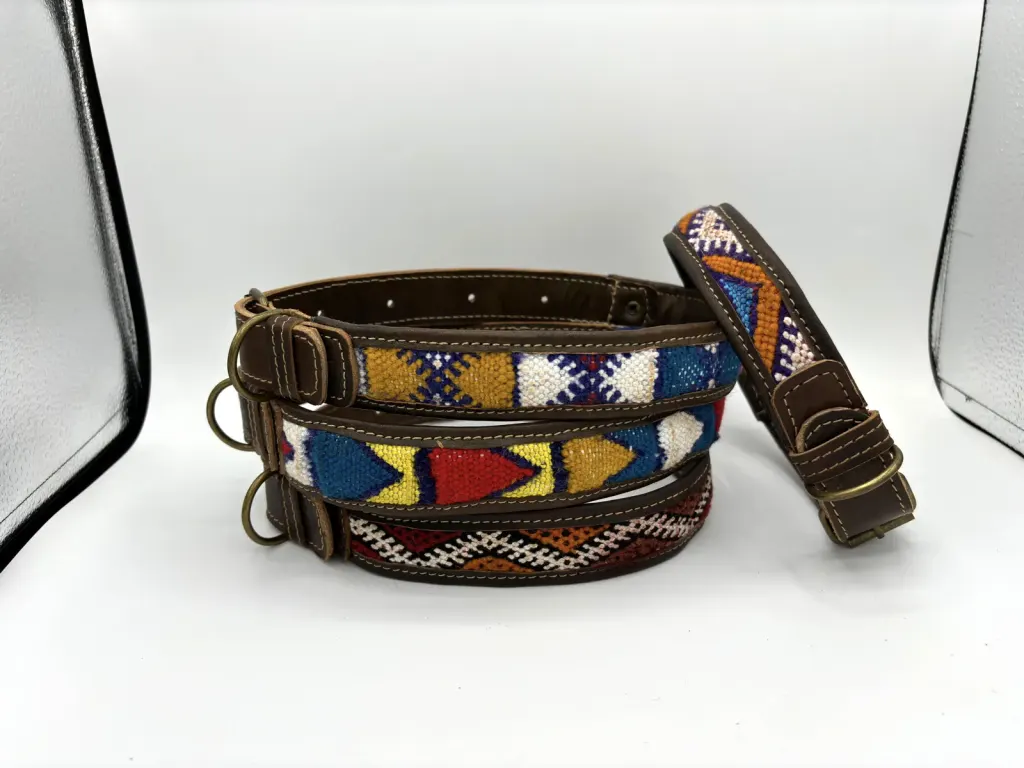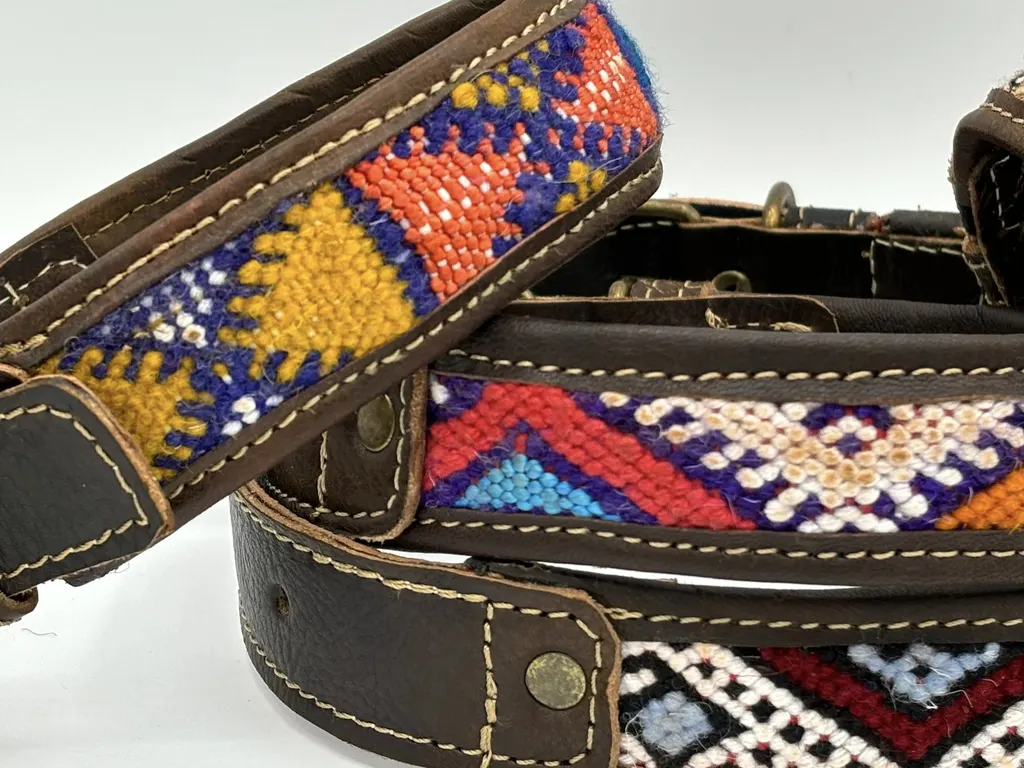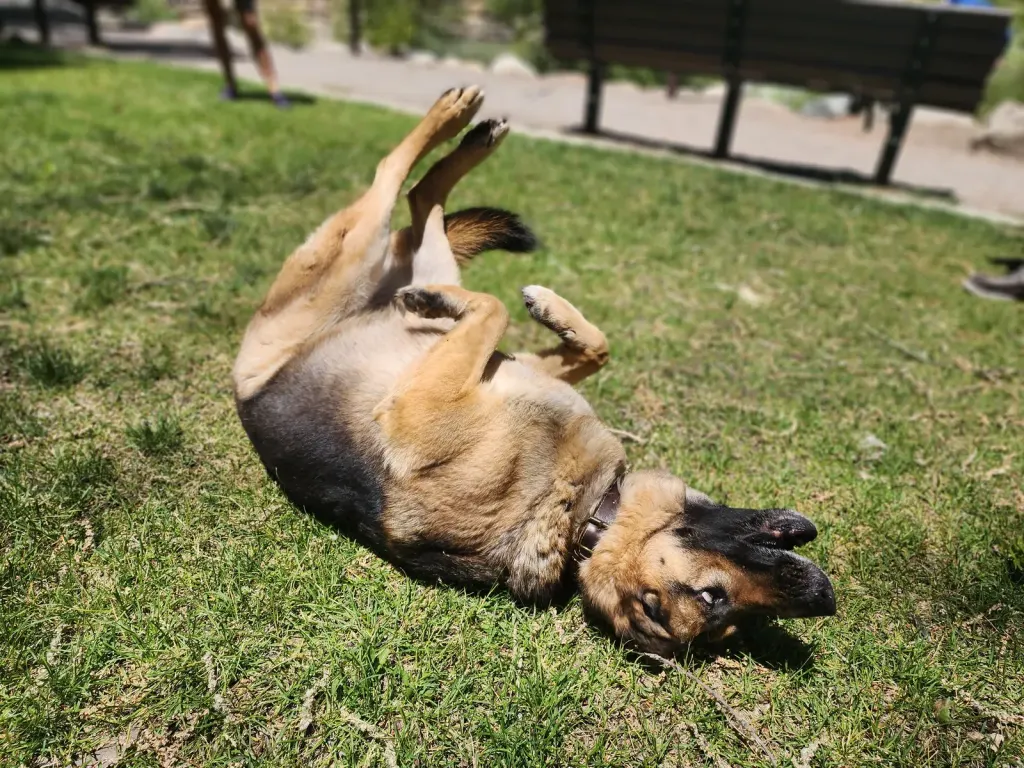
Look up your breed below to get a neck range, plus the BohoBarks size it usually points to. Treat it as a first guess. Published charts can differ by up to six inches for a single breed, and BohoBarks collars cover necks of 8–23 inches.
How do these breed charts work?
We pulled ranges from two public tables that list dozens of breeds: Canine Journal’s neck-size table and a fully grown neck chart from Veselka, a UK pet-collar site. Each gives a low and a high figure in inches. A third, PetSmart’s sizing chart, names only five example breeds per size, so it shows up in the notes instead of the tables.
The last column matches each range to our sizes: XS 8–11”, S 10.5–14”, M 13.5–18” and L 16–23”. Both charts inside one of our ranges? That size wins. A span that straddles two sizes gets a slash, as in S/M. Anything running off either end says so.
Where does XS start, and who falls short?
Necks in this group run roughly 6–14 inches. The smallest size begins at 8”, so the tiniest dogs can miss it.
| Breed | Canine Journal | Veselka | BohoBarks size |
|---|---|---|---|
| Yorkshire Terrier | 6–12” | 8–12” | XS (teacups fall below) |
| Chihuahua | 8–14” | 6–12” | XS/S; a few fall below |
| Pomeranian | 10–14” | 8–14” | XS/S |
| Maltese | 10–14” | 6–10” | XS/S; Veselka’s low end dips under |
| Shih Tzu | 10–14” | 8–14” | XS/S |
| Papillon | 8–12” | 8–12” | XS/S |
| Miniature Dachshund | 8–12” | 8–12” | XS/S |
PetSmart puts Chihuahuas and teacup Yorkies in its smallest bracket, 6–8”, under our XS. Canine Journal lists a teacup Yorkie at 4–8”. Dogs that tiny need a collar cut for tiny necks, and ours is not one.
What fits a pug, a beagle or a corgi?
Most of these dogs sit on a boundary. Our guide for in-between dogs explains why we say to size down in an overlap.
| Breed | Canine Journal | Veselka | BohoBarks size |
|---|---|---|---|
| Pug | 12–16” | 12–18” | S/M |
| French Bulldog | 12–16” | 12–18” | S/M |
| Boston Terrier | 12–18” | 12–18” | S/M |
| Cavalier King Charles Spaniel | 10–16” | 10–16” | S/M |
| Jack Russell Terrier | 10–14” | 10–16” | S/M |
| Miniature Schnauzer | 10–16” | 10–16” | S/M |
| Pembroke Welsh Corgi | 14–16” | 10–16” | S/M |
| Beagle | 12–18” | 12–18” | S/M |
Fit and harness questions for these breeds get more room in our small-dog collar guide.
Which medium breeds can wear M?
Expect M, with L for the bigger frames.
| Breed | Canine Journal | Veselka | BohoBarks size |
|---|---|---|---|
| Greyhound | 14–18” | 12–18” | S/M |
| Border Collie | 14–18” | 14–20” | M/L |
| Pit Bull | 14–18” | 14–20” (American Staffordshire Terrier) | M/L |
| Dalmatian | 14–20” | 14–20” | M/L |
| Australian Shepherd | 16–22” | 14–20” | M/L |
| Standard Dachshund | 16–20” | 8–12” (one entry for all dachshunds) | M/L |
Two notes. “Pit bull” covers several breeds and plenty of mixes. Canine Journal includes it directly, but Veselka has no such entry, so we borrowed its closest relative. Dachshunds are a second oddity: one source splits miniature from standard, an eight-inch jump under one label, while its rival does not. Greyhounds also have narrow heads, and head shape can matter as much as neck size. See the head-slip note in our large-dog guide.
Where do goldens, shepherds and Labs land?
The three most-searched breeds sit in this group.
| Breed | Canine Journal | Veselka | BohoBarks size |
|---|---|---|---|
| Siberian Husky | 16–22” | 14–20” | M/L |
| Boxer | 16–22” | 16–22” | L |
| Weimaraner | 16–22” | 14–20” | M/L |
| Golden Retriever | 16–24” | 16–22” | L; the higher figure is 24” |
| Labrador Retriever | 18–24” | 14–20” | M/L |
| German Shepherd | 18–24” | 16–24” | L; 24” would top our limit |
| Doberman Pinscher | 18–24” | 16–22” | L; one range ends at 24” |
| Rhodesian Ridgeback | 20–23” | 16–24” | L; Veselka’s top is 24” |
Labradors show the widest gap in the set: a four-inch difference at both ends. PetSmart lumps Boxers, Dalmatians, goldens, Labs and Weimaraners together in a Large bracket of 16–26”, wider than our L.
Which breeds outgrow our L?
Our sizes stop at 23”. These breeds mostly measure past it.
| Breed | Canine Journal | Veselka | BohoBarks size |
|---|---|---|---|
| Bernese Mountain Dog | 20–26” | 18–28” | L at the low end, then past 23” |
| Great Dane | 20–26” | 20–30” | Mostly beyond L |
| Rottweiler | 24–30” | 18–26” | Beyond L (one chart’s low end fits) |
| Saint Bernard | 26–32” | 22–32” | Beyond L |
| Newfoundland | 26–32” | 22–32” | Beyond L |
| English Mastiff | 28–38” | 22–32” (listed as Mastiff) | Beyond L |
PetSmart gives the biggest dogs a 24–30” bracket. Their owners are better served by a maker who cuts larger sizes. Measure before you give up, though. A Great Dane at 21 inches would still fit.
Why don’t the numbers agree?
No chart is wrong, exactly. Dogs vary, and a table flattens that variety into two numbers.
Variety and build. One breed name can hide several body types. Canine Journal shows poodles at 8–14” (toy), 10–16” (miniature) and 12–18” (standard). Its weight column is just as loose, with German Shepherds running 50 to 90 pounds. Sex and individual frame push the neck around within that spread, and AKC’s chief veterinarian, Dr. Jerry Klein, says members of any breed, and any litter, will differ.
Age. Veselka shows a Labrador at 8–12” around two months and 14–20” once grown. AKC says puppies keep growing anywhere from 6 to 24 months, depending on size. Our puppy collar size guide covers that stretch.
Coat. A tape laid over a thick double coat reads higher than one pressed close. Push through the fur until muscle pushes back, then read the tape.
Method. AKC tells owners to leave two fingers of room when measuring, and says a buckled collar should keep that same gap. None of the sources says whether its ranges include it.
What if the chart lists two sizes for my dog?
Measure first. The size whose range holds your number wins, and a reading where two ranges meet goes to the smaller size. That is the rule on our care card. Fair warning: AKC’s measuring guide leans toward the larger size whenever a dog straddles a boundary. For our collars we disagree, since the smaller one still has spare holes for loosening. A wrong guess is fixable: our shipping and returns page explains swaps, which cover unworn collars within 30 days.
What does measuring at home involve?
Put your dog on flat ground. Wrap a soft tape around the base of the neck, near the shoulder ridge, where a collar naturally rests. Two fingers should slide under the tape. Write the reading down and repeat once.
Wiggly dogs and fluffy coats get their own fixes in our guide on how to measure your dog for a collar. The full size chart lists every range side by side.
Frequently asked questions
What size collar does a golden retriever need?
A full-grown golden runs 16–22 inches in one chart and 16–24 in another, which suggests L. The top end edges past 23 inches, so tape the actual neck first.
What collar size fits a German Shepherd?
Charts say 16–24 inches or 18–24. Most shepherds should sit inside size L (16–23”). A dog at a full 24 inches needs a bigger collar from another maker.
Which is right for a Lab: 14 inches or 24?
Both numbers show up in print: 14–20 inches at one source, 18–24 at another. That spread is why you should measure the neck itself, then pick M or L from the result.
Can a Chihuahua wear our smallest size?
Often, but not always. Figures for the breed span 6–12 inches in one table and 8–14 in another, and XS starts at 8. Under 8 inches falls just short.
Ready to find your size?
Once you have a number, pick a size and browse the shop. Every design costs $50 in every size and ships from Durango, Colorado, in one to two business days.