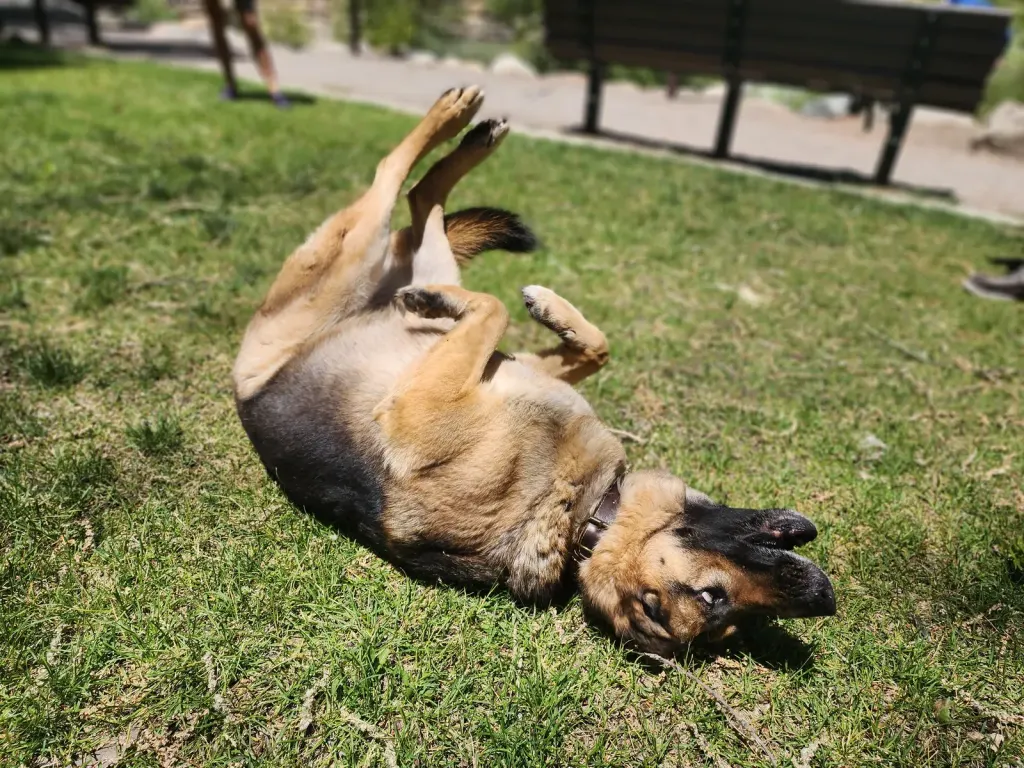
To find the right puppy collar size, circle the base of the neck with a soft tape and leave room for two fingers. Shop for the neck in front of you, never the dog it will become. Then re-check every week, since puppies outgrow gear fast.
How do you measure a puppy for a collar?
Stand your puppy on flat ground. AKC’s measuring guide says to wrap the tape low on the neck, where gear normally rests, starting near the withers (the ridge where the shoulders meet), and to allow two fingers of slack. Read the number, then repeat once.
Squirmy pup? Hold a treat at nose height, or enlist a friend. No tape handy? Mark a length of string where it overlaps itself and stretch it along a ruler.
Your number lands in one of our ranges: XS 8–11”, S 10.5–14”, M 13.5–18” and L 16–23”. The full measuring walkthrough covers coats and corner cases.
How tight is too tight?
Snug without squeezing. AKC says one finger of room is enough on a small dog and two suit a large breed. Two fingers make a sound default when you cannot predict how big the pup will get.
Slack is the bigger gamble. A loose band can let a dog wiggle free, AKC cautions, so buying big to grow into backfires. RSPCA Australia says puppies grow extremely quickly. Its advice for medium and large breeds is to start small and buy a bigger one at each outgrown stage.
Spot trouble early.
Too snug
- Fingers refuse to slide in.
- Fur looks flattened or worn thin under the band, or skin looks pink.
- Your pup claws at its throat.
Too loose
- The band spins around.
- It creeps up behind the ears.
- Three fingers slip in easily.
Red or bare skin deserves a call to your vet. Everything else is a quick fix: use another hole or move to the next size.
When can a puppy start wearing a collar?
According to AKC, simple training can begin at 8 weeks, with wearing a collar given as one example. Keep first sessions short. Let your pup sniff the band, buckle it for a few minutes while treats flow, then remove it before anyone gets annoyed.
Leash lessons are a separate subject. AKC suggests beginners use a plain flat collar, often with a 4-foot leash. Ours is not a training tool. Think of it as an ID-and-style piece for a dog that already walks calmly.
How fast do puppies grow?
Quicker than most owners expect. The pace depends on size, and the chart below shows the share of full size reached at each age. It describes whole-body growth, not neck girth, so lean on it for timing, not inches.
| Age | Small (0–20 lbs) | Medium (21–50 lbs) | Large (51–100 lbs) | X-large (100+ lbs) |
|---|---|---|---|---|
| 6 months | 75% | 66% | 60% | 50% |
| 9 months | 90% | 85% | 75% | 65% |
| 12 months | 100% | 95% | 85% | 80% |
| 15 months | 100% | 100% | 95% | 90% |
| 18 months | 100% | 100% | 100% | 100% |
Source: AKC, “When Do Dogs Stop Growing?” All figures are approximate.
Dr. Jerry Klein, AKC’s chief veterinarian, adds that small breeds typically stop growing by 6 to 8 months. Giant breeds run 12 to 18 months, and a few, Mastiffs among them, take two years.
What does a puppy collar size chart look like?
Veselka, a UK pet-collar site, charts every breed at two months old and again when fully grown. A sample:
| Breed | Neck at 2 months | Neck fully grown |
|---|---|---|
| Chihuahua | 4–6” | 6–12” |
| Yorkshire Terrier | 4–6” | 8–12” |
| Dachshund | 6–8” | 8–12” |
| Pug | 6–8” | 12–18” |
| French Bulldog | 7–9” | 12–18” |
| Beagle | 6–8” | 12–18” |
| Border Collie | 8–12” | 14–20” |
| Boxer | 8–12” | 16–22” |
| Labrador Retriever | 8–12” | 14–20” |
| Golden Retriever | 8–12” | 16–22” |
| German Shepherd | 8–12” | 16–24” |
| Great Dane | 10–14” | 20–30” |
Treat these as ballparks from a single source. Few charts list puppies at all. For full-grown necks from three sources, see our breed-by-breed chart. The same site notes that most dogs need two or more sizes over a lifetime, and that most breeds finish half to three-quarters of their growth by six months.
How often should the tape come out?
Run two fingers under the strap before most walks, then measure with the tape each week. RSPCA’s guidance is at least a few fit checks weekly for young pups. The schedule below follows AKC’s timing.
| Size class | Growing until about | Tape check |
|---|---|---|
| Small breeds | 6 to 8 months | Every week |
| Medium breeds | 12 months | Weekly, then monthly after 9 months |
| Large and giant breeds | 12 to 18 months, sometimes 24 | Weekly through year one, monthly after |
Mixed-breed pup? Dr. Klein calls final size a guessing game when heritage is unknown. His tip: knobs you can still feel along the ribs mean height growth is probably not finished.
Should you buy a cheap starter or a keepsake?
Start cheap. A plain adjustable nylon band covers the fast months, and nobody grieves when a pup outgrows it. Save the handwoven piece for later.
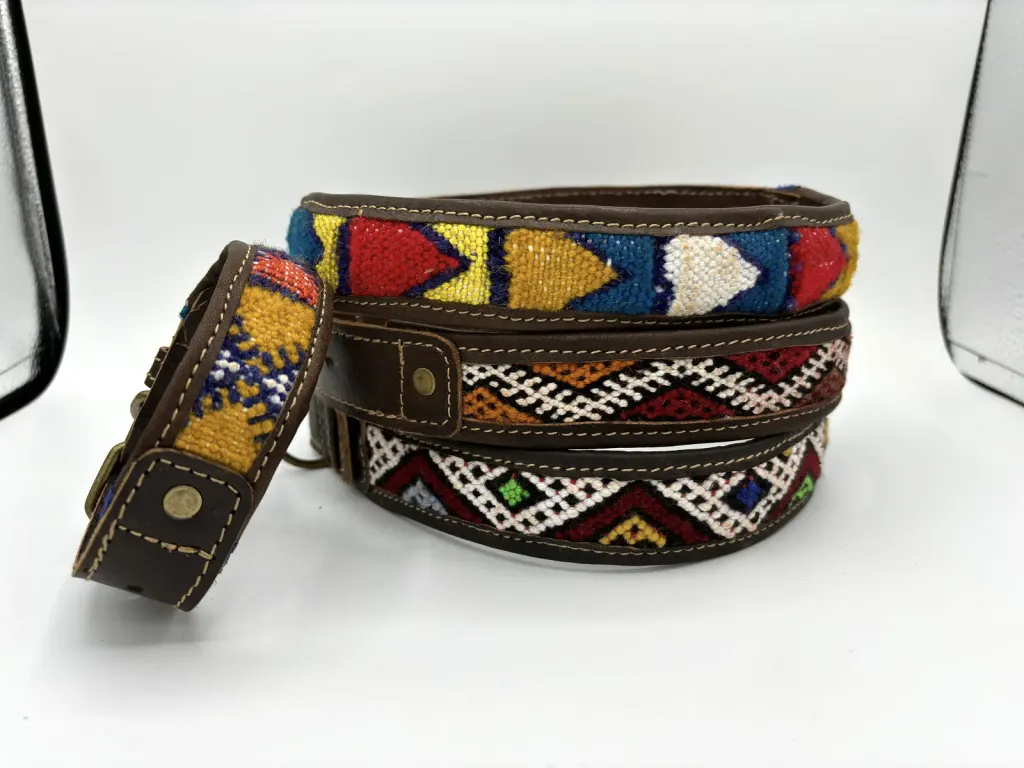
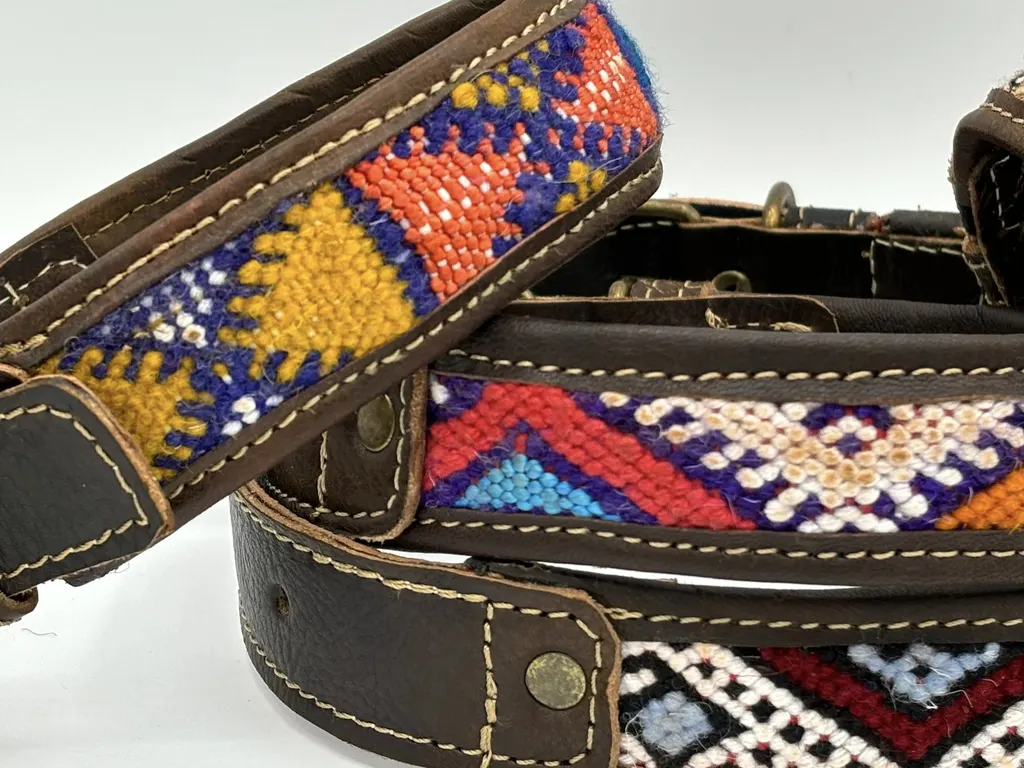
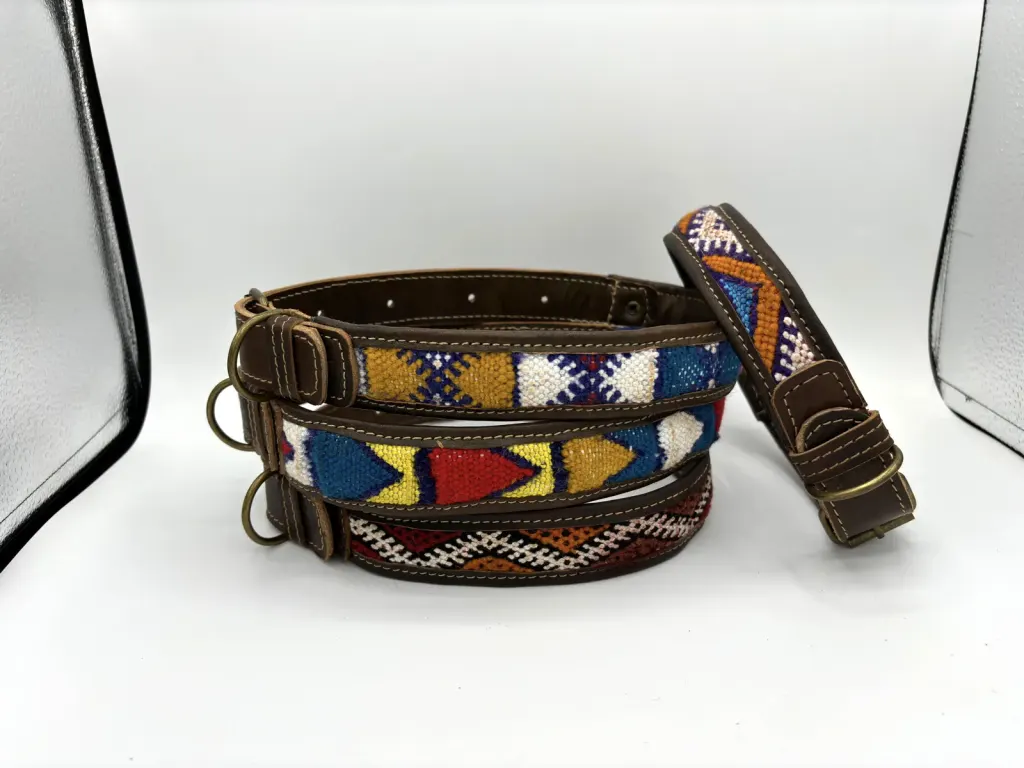
Ours pairs full-grain leather with a Moroccan wool band, brass-tone hardware and a D-ring. It is built to last for years, so it earns its price once the neck stops changing. We would rather you wait than watch a pup outgrow it in a month.
Small breeds are the exception. A Yorkie, Chihuahua or Dachshund pup nearing 6 to 8 months may already be close to full size. If the tape reads 8 inches or better, our XS (8–11”) or S (10.5–14”) can work. Medina Mosaic and Caravan Dreams both come in those sizes at $50. Between sizes, size down. Exchanges cover unworn collars for 30 days, so measure twice before the first wear; the shipping and returns page has details.
Do puppies need ID tags and a microchip?
AKC recommends both. A microchip is a rice-grain transponder that a vet places under the loose skin between the shoulder blades, no more invasive than a vaccination. It only works once you register it with a pet-recovery database.
Collars and tags can fall off, the same page admits, yet pets should keep wearing ID with the owner’s phone number. AKC Reunite adds that a visible tag lets a stranger help at once, no clinic visit needed. A D-ring on ours holds the tag. Look it over each time you test the fit, since puppies scrape and chew.
Does a puppy need a harness too?
Maybe. Our collar vs harness guide sorts out who needs which. One rule carries over: harness straps need the same weekly fit check.
Frequently asked questions
What collar size does an 8-week-old puppy need?
No single answer, because necks vary by breed. Wrap a measuring tape around yours and keep a two-finger gap rather than trusting a chart.
Should I buy a collar my puppy will grow into?
Skip it. Slack invites escapes, and spare inches do a young dog no good. Fit today’s neck, then upgrade later.
Can a small-breed puppy wear an XS?
Yes, if the reading hits 8 inches and two fingers still fit. Little breeds stop growing earlier, which brings the keepsake moment forward.
How often should I measure my puppy’s neck?
Once a week with the tape, plus a quick finger check before outings. That catches a snug band before it rubs.
Ready for a collar that lasts?
Neck measured and growth slowing? Browse sizes XS through L in the shop. Every design is $50, handwoven in Morocco, and ships from Durango, Colorado, in one to two business days.