Most of Morocco’s rugs and flat-weaves come from Amazigh weavers, mostly women, who learn the craft at home and pass it from mother to daughter. The patterns are geometric, the wool is local, and what a pattern means depends on who you ask. This article tours that tradition and says where our collars fit in.
One note first. We know our collars are handwoven in Morocco. The weaver, the village and the region are unknown to us, so we won’t guess.
Who are the Amazigh people?
The Amazigh are the Indigenous people of North Africa, with communities across Morocco, Algeria and Libya, says Wikipedia. Amazigh is their own word for themselves, and it’s the one we lean on here. Shoppers still type “Berber rugs” into search boxes, so that older term shows up too.
Language is part of the story. Article 5 of Morocco’s 2011 constitution names Arabic as the State’s official language. Tamazight is one too, and the text calls it the common patrimony of all Moroccans. It has an ancient script of its own, Tifinagh. An article from the French university INALCO follows that history. It adds that IRCAM, the royal institute for Amazigh culture, built a standard version. Primary schools now use it.
Who weaves Moroccan rugs, and how?
Women do. A regional guide to Amazigh rugs calls weaving knowledge held by women, handed down with the patterns themselves. The work starts long before the loom. Wool is shorn, washed, dried and carded, then spun by hand on a spindle. A big rug can take months.
Looms matter too. One dealer’s write-up of the hanbel says settled Atlas communities favored the vertical fixed-frame loom, which allows larger and more complex pieces than the ground looms nomads carried. Finished hanbels served as floor coverings, wall hangings and sleeping mats.
Some communities wrapped the work in ritual. The regional guide describes women setting dye baths out under starlight the night before dyeing, to ward off harm, and cutting a finished rug from the loom behind a closed door. Customs differ from place to place, and many have faded.
Nothing here is frozen. Settled lives, tourism, cooperatives and export markets have reshaped the trade. Some traditions have weakened, while others are enjoying a revival led by weavers themselves.
What are the main types of Moroccan rugs?
Styles differ by region, wool and weave. Four names come up most.
| Type | How it is made | Known for |
|---|---|---|
| Beni Ourain | Thick knotted pile, sheep’s wool | Cream ground, dark diamonds, Middle Atlas |
| Azilal | Wool, often medium pile | Loose, expressive drawing and color |
| Boucherouite | Recycled cloth and mixed fibers | Bright, improvised rag-rug look |
| Hanbel and kilim | Flat weave, no pile | Dense geometric bands |
Those descriptions come from Nazmiyal’s guide to rug types and the earlier source. The flat-weave row may be new to you, so see our explainer on what a kilim is.
Cream rugs of that style caught the eye of mid-century designers like Le Corbusier, who paired thick Berber pile with sleek furniture, reports a Wikipedia article on Moroccan rugs. Some mountain weavers go further and mix knots, cord work and smooth weaving in one piece. The best known of these are called Glaoua.
Not every “Berber carpet” is Moroccan or handmade, by the way. Wikipedia notes that modern industrial versions use a machine-made loop pile built to mimic hand-knotted originals.
What dyes do weavers use?
Traditionally, plants and minerals. One documented High Atlas tradition from the Siroua massif used indigo for blue, wild broom flowers for yellow and madder root for red, each fixed with alum. Henna and other natural materials rounded out the palette.
Synthetic dyes have been common for decades, and they have sometimes reshaped old palettes. A textile journal makes a fair point: the claim “natural dye” needs evidence, not a hunch from the color.
We hold ourselves to that standard. How the wool in our bands was dyed is something we can’t tell you, so we stay quiet.
How should you read the patterns?
Carefully. Published readings link the diamond to femininity or motherhood. The X stands for a female figure, the cross for union, and zigzags for water, snakes or a protective boundary, as the guide to Amazigh rug motifs lays out.
Now the warning. The same page stresses that such readings are no fixed code shared by every weaver. Meaning shifts with region, family, period and the individual. The journal agrees that motifs shouldn’t be reduced to universal symbolic claims.
So when you admire the diamonds on a BohoBarks collar, enjoy them. Don’t trust us, or anyone, to hand you one true meaning.
Where do souks and medinas fit in?
Weaving happened at home, and selling happened in town. Rural families sell handmade carpets through local markets, merchants and tourists, and Marrakesh has long been a meeting point. UNESCO’s listing for the Medina of Marrakesh describes living lanes, houses, souks, fondouks and traditional trades. Almoravid rulers founded the city around 1070, and it grew into a political, economic and cultural hub.
The journal calls Marrakech a commercial crossroads that links regional producers to buyers at home and abroad. It calls Fez a center of urban craft and trade. Trade like that is part of how Moroccan textiles travel.
How does the craft show up in a dog collar?
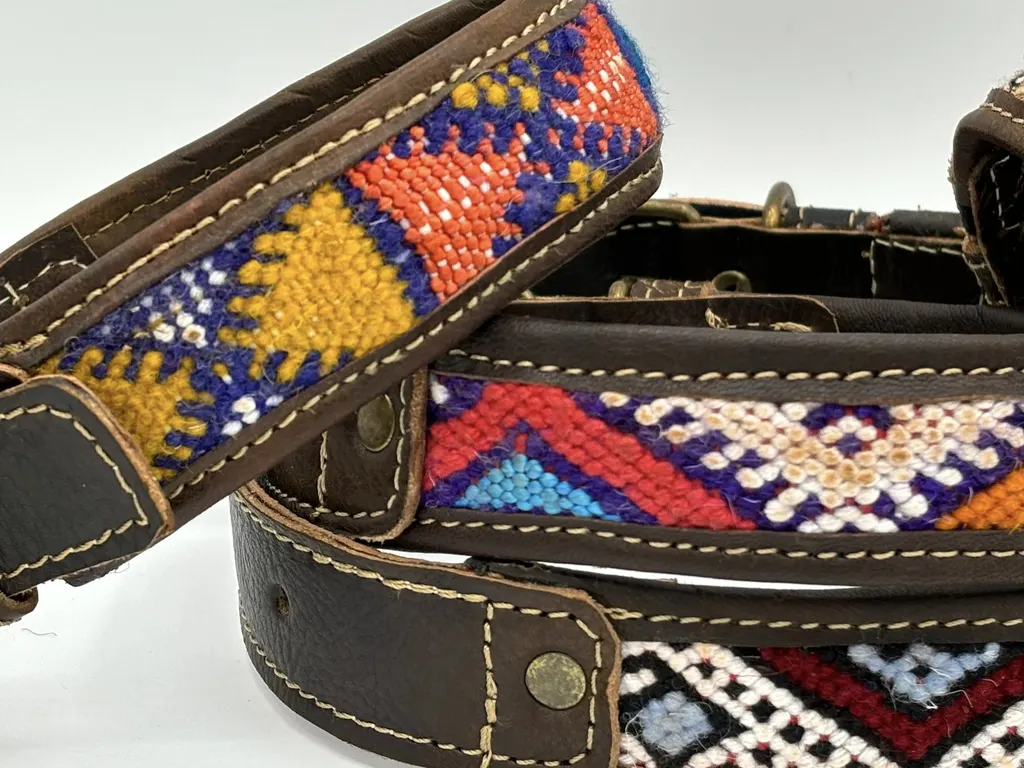
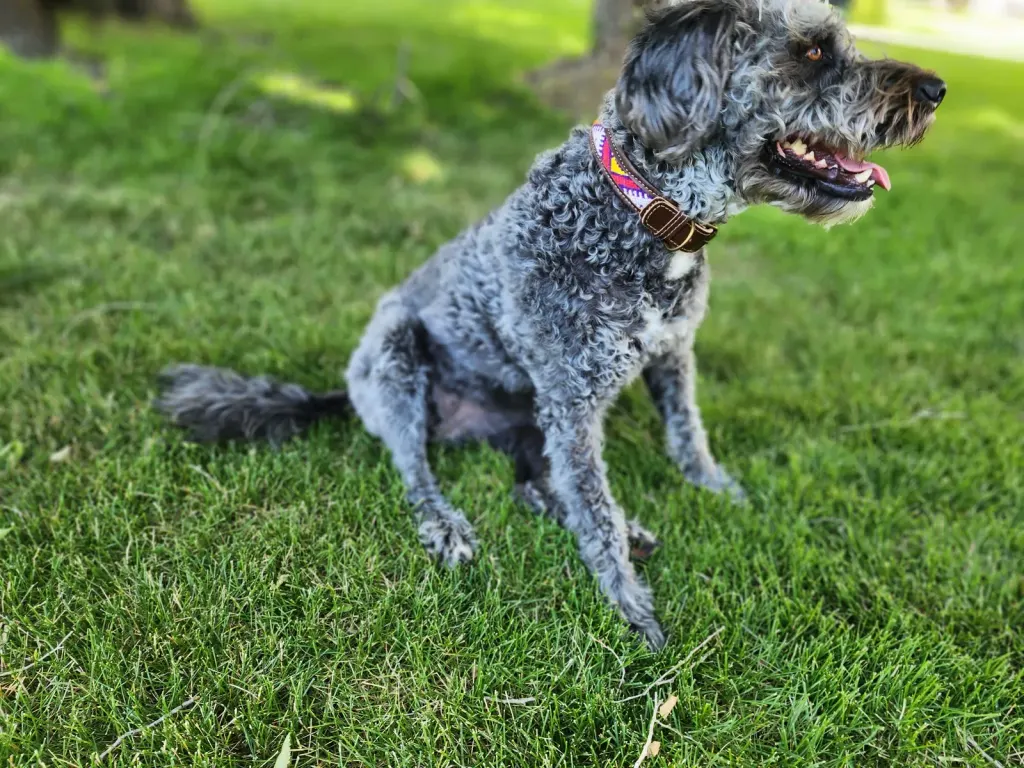
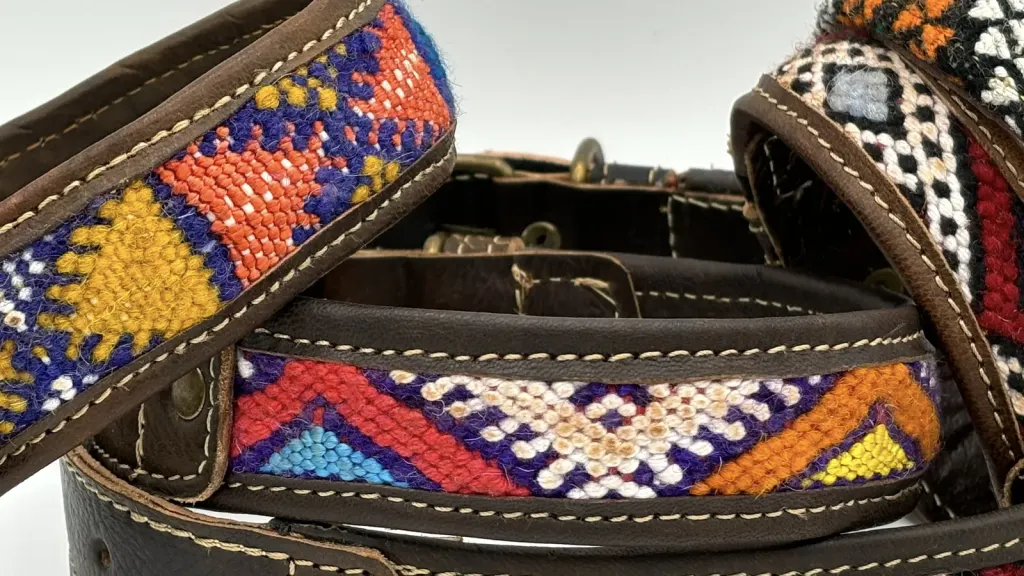
In small, handmade ways. Each BohoBarks collar pairs a handwoven Moroccan wool band with full-grain leather, brass-tone hardware and a D-ring. The band comes from the Berber carpet and kilim tradition. Because hands made it, no two bands match exactly.
Names like Berber Sands and Atlas Adventure nod to places and ideas. They’re inspirations, not claims about where a band was woven. Read our story for how BohoBarks began, check the materials page for the weave up close, and browse Berber Sands and Atlas Adventure if bold geometry speaks to you.
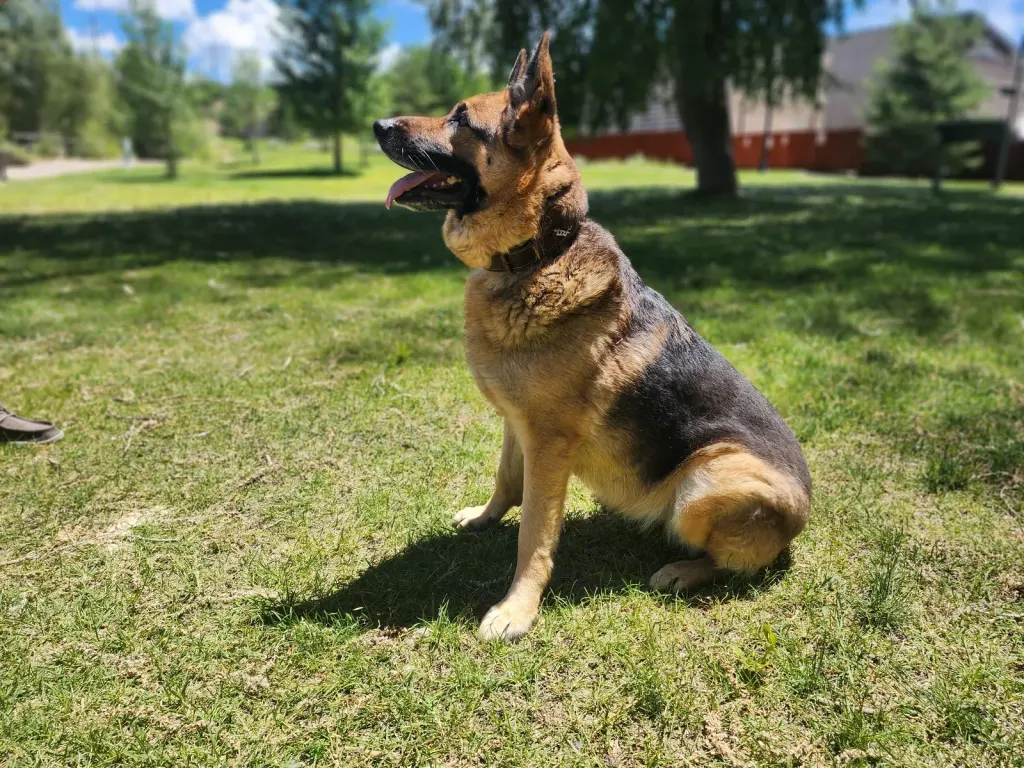
A craft with deep roots can ride along on your dog’s neck. Just remember whose history it is: the weavers’. Our part is small.
Frequently asked questions
What does Berber mean?
Berber is an outsider’s label for the Indigenous peoples of North Africa, and it is related to the Arabic word for barbarian. Many in the community prefer Amazigh, their own word. We use both terms because sellers and searchers still lean on the older one.
Are Moroccan rugs handmade?
Traditional ones are woven by hand, usually at home. Machine-made carpet sold under the Berber name is common too, so ask how a piece was made before you pay handmade prices.
What do the symbols on Moroccan rugs mean?
People read them as signs of fertility, water, protection and similar ideas. No single code covers every weaver, and meanings vary by place and family. Treat any one translation as a reading, not a rule.
Is Tamazight recognized in Morocco’s constitution?
Yes. The 2011 constitution makes Tamazight an official language alongside Arabic. Its traditional script, Tifinagh, is taught in Moroccan primary schools.
Want to carry a little of that craft on your walks? Shop the BohoBarks collars and choose a handwoven band.